
Last Updated: October 28, 2026
Quick Summary
Bone broth is a savory liquid made by simmering animal bones, connective tissue, and vegetables for many hours, pulling collagen, gelatin, minerals, and amino acids into the water. For pets, it supports hydration, digestion, and appetite, and may help joint mobility, though evidence in dogs and cats is largely anecdotal. Plain, unseasoned bone broth is safe for most dogs and cats in sensible amounts.
- Never include onion, garlic, leeks, chives, or shallots in bone broth, as these can cause hemolytic anemia.
- Start cats and toy breeds at 1-2 tbsp of broth once daily.
- Simmer bones on low for 12 to 24 hours, then skim fat and strain before storing.
- Refrigerate broth in a sealed container and use within about four days, or freeze in ice cube trays.
- Ask your veterinarian before serving broth to pets with kidney disease, heart disease, or pancreatitis.
Table of Contents
- Why Bone Broth Has Become a Staple in Pet Nutrition
- The Potential Health Benefits of Bone Broth for Dogs and Cats
- Collagen, Gelatin, and the Nutrients Behind the Hype
- Is Bone Broth Safe for Dogs and Cats?
- How Much Bone Broth to Give a Dog or Cat
- A Simple Bone Broth for Dogs Recipe You Can Make at Home
- How to Choose the Best Bone Broth for Pets
- What the Evidence Says and Where Claims Need Caution
- Storing, Serving, and Adding Broth to Your Pet's Routine
- Choosing a Small-Batch Bone Broth for Your Pet
- Frequently Asked Questions
Why Bone Broth Has Become a Staple in Pet Nutrition
Walk into any pet boutique and you will see shelf-stable cartons of bone broth stacked beside the kibble. The category has exploded because it solves an old problem: dry food is convenient, but it is not especially appealing or hydrating. A warm, savory pour-over changes that.
At ZOLENA, we offer bone broth. We believe food should do more than fill a bowl.
The Potential Health Benefits of Bone Broth for Dogs and Cats
Bone broth is a liquid made by simmering animal bones, connective tissue, and often vegetables in water for many hours. The long cook pulls collagen, gelatin, minerals, and amino acids into the water, producing a savory liquid that gels when chilled.
Joint Health, Mobility, and Cartilage Support
Bone broth contains natural collagen and gelatin, the same structural proteins found in cartilage. Many owners of senior pets and ailing dogs report improved mobility after adding broth to meals, though formal clinical trials on broth specifically are scarce. If your dog is stiff on stairs, a daily pour-over is a low-risk thing to try alongside your vet's advice.
Digestive Health, Gut Support, and Hydration
This is where broth earns its reputation. The liquid is easy to digest, adds meaningful water to a dry diet, and the gelatin may soothe an irritated gut. For pets recovering from illness or surgery, a warm broth topper often encourages eating when nothing else works.
Appetite Support for Fussy Eaters and Senior Pets
A drizzle of warm broth over kibble releases aroma, and aroma drives appetite. Owners of fussy eaters, cats with reduced smell sensitivity, and unwell dogs frequently find broth is the difference between a skipped meal and a finished one. It is one of the simplest appetite tools available.
Collagen, Gelatin, and the Nutrients Behind the Hype
The pitch usually centers on collagen. Here is what the liquid actually contains: collagen and its breakdown product gelatin, amino acids such as glycine and proline, and minerals drawn from the bones during the long simmer nutrient composition of bone broth.
One caveat worth stating plainly: a 2017 study in the Journal of Agricultural and Food Chemistry noted that animal bones can contain trace amounts of toxic metals, which is why sourcing and preparation matter metals in animal bone broths. Use bones from healthy, well-raised animals and skim the fat.
Is Bone Broth Safe for Dogs and Cats?
Plain, unseasoned bone broth is safe for most dogs and cats in sensible amounts. The risks come from what is added and from serving it to pets whose medical conditions make rich, mineral-dense liquids a poor fit. The sections below separate the universal rules from the condition-specific cautions that most guides skip.
Ingredients to Avoid and Veterinary Cautions
Never include onion, garlic, leeks, chives, or shallots. These damage red blood cells in dogs and cats and can cause hemolytic anemia. Skip added salt, bouillon cubes, seasoning blends, and yeast extract. Do not feed cooked bones, which splinter and can cause serious internal injury, and do not let pets chew raw bones unsupervised.
Species-Specific Guidance for Cats
A common pattern is that cats accept broth more readily than dry food alone when they are recovering from illness or stress, but individual acceptance varies widely.
Veterinary Cautions and Medical Conditions
| Condition | Concern | What to do |
|---|---|---|
| Kidney disease | Broth can be high in phosphorus and sodium, which burden compromised kidneys | Ask your veterinarian before serving; a renal diet may prohibit it |
| Heart disease | High sodium can worsen fluid retention | Use only unsalted broth and confirm with your vet |
| Pancreatitis (current or prior) | Fat content can trigger flare-ups | Skim fat thoroughly and get veterinary approval first |
| Food allergies | Protein source may trigger reactions | Introduce one novel protein at a time and watch for itching or GI signs |
| Sodium-restricted diets | Added salt is a direct conflict | Read every label; homemade unsalted broth is safer than most commercial options |
| Diabetes or obesity | Broth adds calories and fat | Account for it in the daily calorie total |
When to Consult a Veterinarian
Consult a veterinarian before starting broth if your pet has any diagnosed medical condition, is pregnant or nursing, is under six months old, or is recovering from surgery or illness. Stop serving and call your vet if you see vomiting, diarrhea, lethargy, or a refusal to eat after introduction. Broth is a food, not a treatment, and it should never delay veterinary care for a sick pet.
How Much Bone Broth to Give a Dog or Cat
| Pet Size | Starting Amount | Frequency |
|---|---|---|
| Cats and toy breeds | 1-2 tbsp | Once daily |
| Small dogs under 10 kg | 2-3 tbsp | Once or twice daily |
| Medium dogs 10-25 kg | 1/4 cup | Once or twice daily |
| Large dogs over 25 kg | 1/4 to 1/2 cup | Once or twice daily |
A Simple Bone Broth for Dogs Recipe You Can Make at Home
This is the method we use. It takes about ten minutes of hands-on work and the rest is unattended simmering. A slow cooker makes it nearly foolproof.
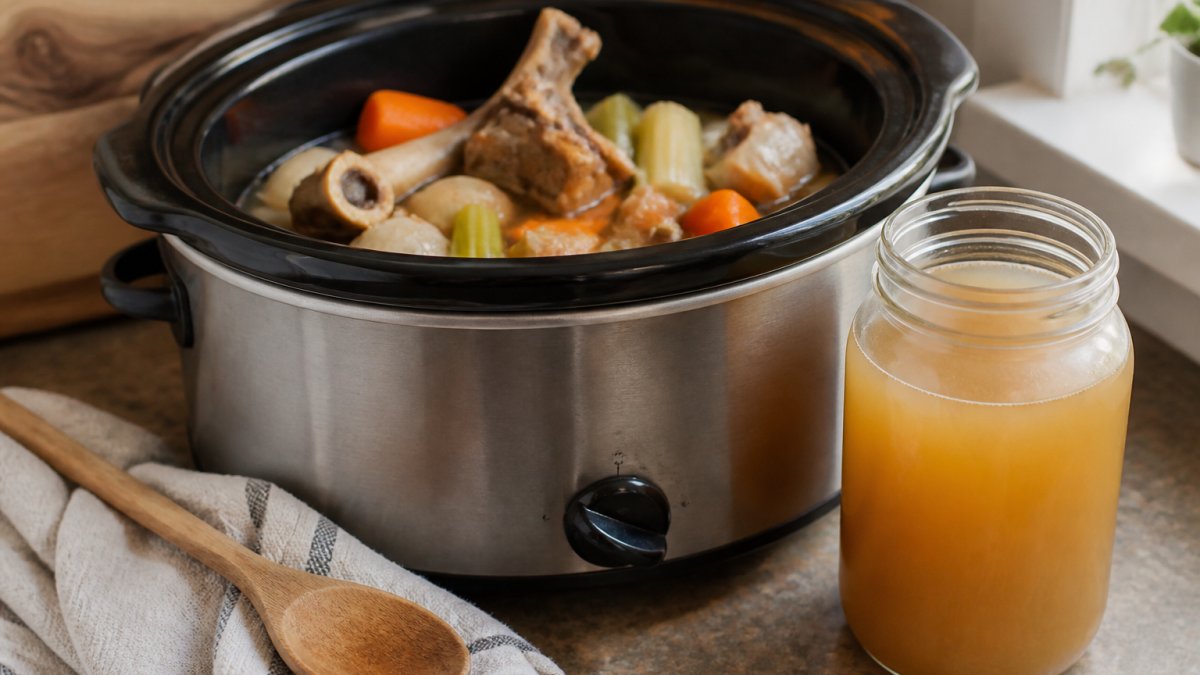
What you'll need: 1-1.5 kg of raw bones from a healthy animal, 2 tbsp apple cider vinegar, water to cover, and optional pet-safe vegetables like carrots or celery. No onion, no garlic, no salt.
Step-by-Step Slow Cooker Method
- Rinse the bones and place them in the slow cooker.
- Add the vinegar and enough water to cover by an inch.
- Set to low and simmer for 12 to 24 hours.
- Skim any foam and fat from the surface.
- Strain through a fine sieve and discard the bones.
- Cool, then refrigerate until the fat rises and sets.
- Skim the fat, portion, and store.
Expected result: a golden liquid that gels when cold. If it does not gel, use more bones next time.
How to Choose the Best Bone Broth for Pets
Avoid products listing onion powder, garlic, salt, yeast extract, or "natural flavor" as a catch-all. Check whether the broth is intended for pets or for people, since human broths often contain sodium and aromatics. Look for a clear protein content and a sourcing statement. A broth that gels when refrigerated is a good sign of adequate collagen.
What the Evidence Says and Where Claims Need Caution
Honesty matters here, and most competitor articles skip it. The evidence for bone broth in pets is largely anecdotal, extrapolated from human nutrition research, or based on the known composition of the liquid rather than on clinical trials in dogs and cats. That does not make broth useless, it means you should know which claims are established and which are proposed.
Established Nutritional Facts
Those facts support the practical claims: hydration, palatability, and appetite support. They do not support claims that broth rebuilds cartilage or cures disease.
Proposed Benefits That Need More Research
- Weight loss. Broth adds calories and fat; it is not a weight-loss food.
How to Evaluate a Claim
- Is the source selling something? A manufacturer's claim about its own product deserves more scrutiny than a veterinary nutrition textbook.
Safety Evidence Worth Knowing
A 2017 study in the Journal of Agricultural and Food Chemistry reported that animal bones can contain trace amounts of toxic metals, which is why sourcing and preparation matter metals in animal bone broths. This is a useful reminder that sourcing quality is part of safety, not just marketing. Choose bones from healthy, well-raised animals, skim the fat, and avoid broth made from bones of unknown origin.
What This Means for Your Pet
The honest position is that broth is a low-risk, palatable way to add moisture and flavor to a pet's diet, with plausible but unproven benefits for joints and digestion. It is not a medicine, and it should not replace a balanced diet or veterinary care. If your pet has a medical condition, treat broth as something to discuss with your veterinarian rather than something to rely on.
Storing, Serving, and Adding Broth to Your Pet's Routine
Refrigerate broth in a sealed container and use within about four days, or freeze in ice cube trays for single servings. Warm it gently before serving; never microwave to scalding. Pour over kibble, mix into wet food, or serve alone as a treat.
Choosing a Small-Batch Bone Broth for Your Pet
At ZOLENA, we handcraft our bone broth in small batches in New Brunswick. We also offer grass-fed beef tallow skincare.
Frequently Asked Questions
Can pets have bone broth every day?
Most healthy dogs and cats can have a small amount of bone broth daily, typically a few tablespoons for small pets and up to a quarter cup for larger dogs. Treat it as a supplement or meal topper rather than a meal replacement. If your pet has kidney disease, pancreatitis, or is on a prescription diet, ask your veterinarian before making it a daily habit. Watch for digestive upset in the first week and scale back if it occurs.
What is the downside of bone broth for pets?
The main downsides are sodium content, calorie creep, and preparation mistakes. Many store-bought broths are high in salt, which is hard on pets with heart or kidney conditions. Homemade broth made with cooked bones carries a splintering risk if bones are left in, and onion or garlic added for flavor are toxic to dogs and cats. A 2017 study in the Journal of Agricultural and Food Chemistry also noted that animal bones can contain trace amounts of toxic metals, so sourcing matters.
Is bone broth safe for both dogs and cats?
Yes, plain bone broth made without onion, garlic, salt, or seasoning is generally safe for both dogs and cats. Cats are obligate carnivores and often benefit from the added moisture and palatability, especially senior cats who drink too little water. Start with a teaspoon for cats and watch for stomach upset. Avoid any broth containing xylitol, which is extremely toxic to dogs, and check labels for added salt.
What ingredients should pet owners avoid in bone broth?
Avoid onion, garlic, leeks, chives, and shallots, all of which can damage red blood cells in dogs and cats. Skip added salt, bouillon cubes, and seasoning blends. Xylitol, sometimes found in flavored or sweetened products, is dangerous for dogs. Also avoid cooked bones in the finished broth, since they can splinter. Look for short ingredient lists and broths made without preservatives or artificial flavorings.
How much bone broth can I give my dog?
A practical starting point is about one tablespoon per 10 pounds of body weight per day, split across meals. A 10-pound dog might get one tablespoon, while a 50-pound dog could have around a quarter cup. Pour it over kibble or serve it slightly warmed on its own. Introduce it gradually over several days and adjust based on your dog's digestion and your veterinarian's advice.
Can bone broth help a fussy dog eat?
Warm bone broth is one of the most reliable meal toppers for picky eaters because the aroma and natural gelatin make dry food more appealing. Drizzle a tablespoon or two over kibble and let it soak for a minute. For senior or ailing dogs with reduced appetite, broth adds moisture and scent that can encourage eating. It is not a treatment for underlying illness, so persistent appetite loss warrants a vet visit.
Finding a broth you can trust should not require a chemistry degree. ZOLENA makes small-batch bone broth with simple, natural ingredients and clear sourcing, so you know exactly what is going into your pet's bowl. Get started with ZOLENA and give your dog or cat a topper you can feel good about serving.


